
The history of a nation is often told through the lens of its political evolution. For the Philippines, this story is particularly complex, marked by indigenous structures, colonial impositions, and the gradual forging of a unique national identity. Two distinct political models stand out when examining this journey: the American Assembly, introduced during the period…
Tag: Philippine political history
Lorenzo Tañada: The ‘Grand Old Man’ Who Battled Authoritarianism in the Philippines Senate
In the vast and sometimes turbulent landscape of Philippine history, few figures stand as tall and unwavering as Senator Lorenzo M. Tañada. Known affectionately as the “Grand Old Man of the Philippine Senate,” Tañada was more than just a long-serving legislator; he was, for many Filipinos, the conscience of the state, a persistent and courageous…
American Democracy in the Philippines: Did It Truly Fit?
The turn of the 20th century marked a dramatic shift in the Philippines. After centuries under Spanish rule and a brief, passionate attempt at independence, the islands found themselves under the control of the United States. The Americans arrived not just with military force, but with a stated mission to bring “civilization” and prepare Filipinos…
The Filipino Elite and American Administrators: Political Clashes in Colonial Philippines
The period of American rule in the Philippines (1898-1946) was a time of significant transformation, marked by both cooperation and conflict between the colonizers and the colonized. At the heart of much of the political maneuvering and development lay the complex relationship between the American administrators, tasked with implementing U.S. policy, and the established Filipino…
The Evolution of Filipino Political Parties Under Early American Rule (1900s)
The turn of the 20th century marked a profound shift in the trajectory of Philippine history. Following centuries of Spanish colonial rule and a brief, fervent period of revolutionary independence, the archipelago found itself under the burgeoning control of the United States. This era, particularly the early 1900s under American civil administration, was a crucible…
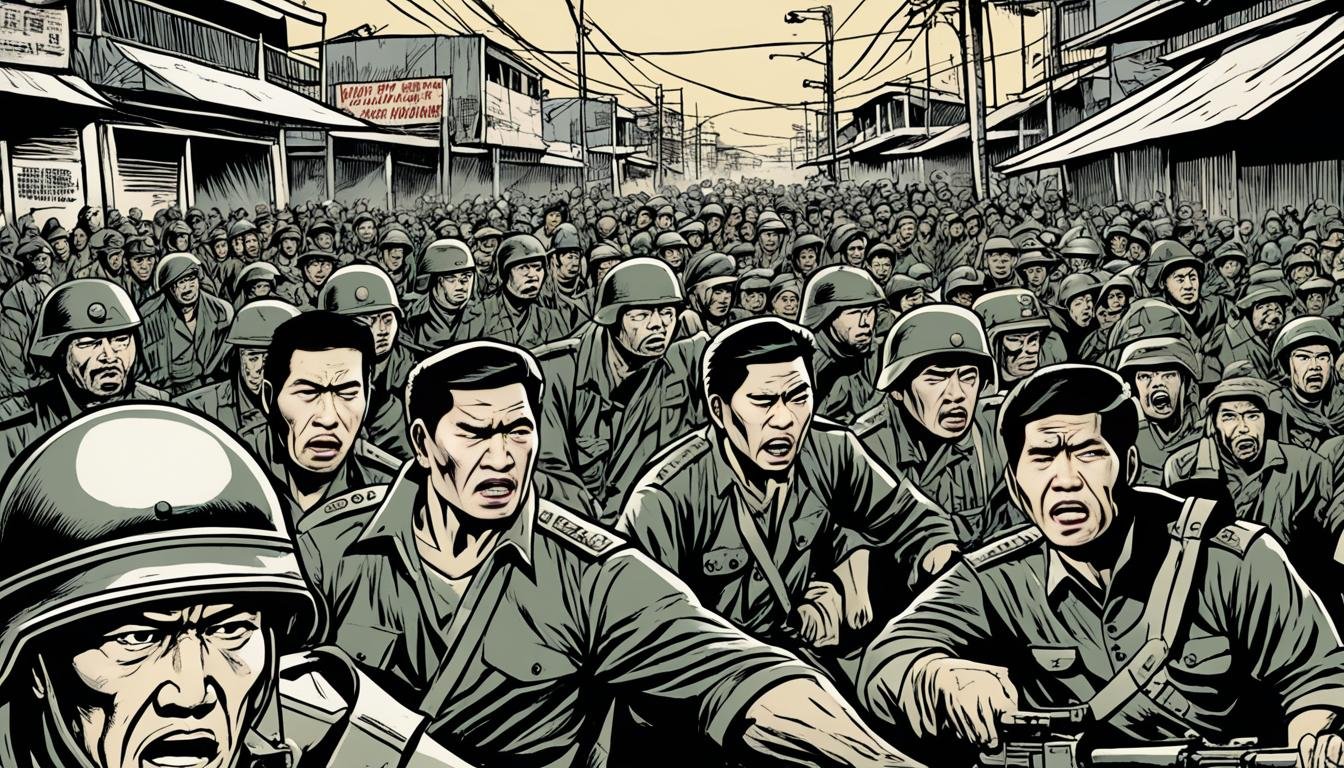
Marcos Declares Martial Law in the Philippines
The 20th century in the Philippines is marked by periods of democracy, struggle, and authoritarian rule. Among the most pivotal and controversial moments in this turbulent history is the declaration of martial law by then-President Ferdinand Marcos in 1972. This single act fundamentally reshaped the political landscape, civil liberties, and socio-economic trajectory of the nation…
The Birth of the Kilusang Bagong Lipunan Party
The Kilusang Bagong Lipunan Party (KBL), translated as the “New Society Movement,” stands as a pivotal, albeit controversial, entity in Philippine political history. Its emergence marked a significant transformation in the nation’s political landscape, shifting away from the multi-party democratic system that characterized the post-war era towards a structure dominated by a single, powerful political…

The Impact of the Cold War on Philippine Politics
The Cold War reshaped global politics, and its effects were deeply felt in the Philippines. As the United States and the Soviet Union vied for influence, the Philippines became a strategic battleground. This geopolitical rivalry influenced local political realignments and shaped the nation’s governance for decades. During this period, the Philippines strengthened its alliance with…